


CONNECTING PEOPLE WITH MARINE CONSERVATION
PROTECTING VICTORIA'S MARINE BIODIVERSITY
Project: SEA-SWEEP
EUROPEAN FAN WORM MANAGEMENT
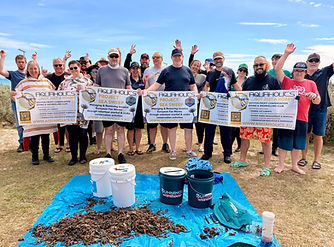
Project Sea-Sweep is Aquaholics’ invasive species response project focused on the targeted removal and monitoring of European Fan Worms (Sabella spallanzanii) in Port Phillip Bay.
The project trains volunteer divers and snorkellers to identify, record and safely remove fan worms under approved protocols, while collecting data that can support future marine pest management.
Sea-Sweep combines practical conservation diving, citizen science and cultural learning, with Traditional Owner knowledge and Sea Country perspectives helping shape how volunteers understand and care for the Bay.
This project is partially funded through a grant received from the Port Phillip Bay Fund, provided by the Victorian Department of Energy, Environment & Climate Action (DEECA). Thanks to the funding received, Aquaholics is able to offer the above mentioned training, run by the dive professionals at Aquatic Adventures.
Why it matters:
Invasive marine species can spread quietly through underwater environments, often becoming established before the wider community notices their impact. European Fan Worms compete with native filter feeders, occupy available habitat and can alter the structure of local marine ecosystems when left unmanaged.
Project Sea-Sweep matters because it turns trained divers into an early response and ongoing management workforce. By helping volunteers identify, record and remove European Fan Worms at targeted sites, Aquaholics supports practical action to reduce invasive species pressure and protect the biodiversity of Port Phillip Bay.
What volunteers do:
-
Identify European Fan Worms
-
Record location/data
-
Remove EFWs, under protocol
-
Submit results


Impact | Number | What this means |
|---|---|---|
Sites monitored | 8 | Aquaholics is building knowledge across multiple locations, helping identify site-specific issues, species presence and future conservation priorities. |
Pest/Invasive reports made | 8 | Early detection and reporting helps improve awareness of invasive species and supports broader efforts to track and respond to marine pests. |
EFW removed | 25,124 | Thousands of European Fan Worms have been removed from local marine habitats, helping reduce pressure from this invasive species at targeted sites. |
NPS removed | 534 | Northern Pacific Seastars have been removed from affected areas, supporting local efforts to limit the impact of this invasive predator. |
Undaria removed (KG) | 5 | Early or targeted removal helps improve detection skills and supports efforts to manage invasive seaweed before it becomes more established at monitored sites. |
People trained | 15 | More volunteers are gaining the skills and awareness needed to participate safely and effectively in marine conservation activities. |
Proposed Project Upgrade
Aquaholics is seeking to expand Project Sea-Sweep from a targeted European Fan Worm response project into a broader invasive marine species management program across Port Phillip Bay and also Western Port.
The current Sea-Sweep project focuses on identifying, recording and removing European Fan Worms at priority sites. The proposed upgrade would build on this foundation by adding further priority invasive species to the project scope, expanding the number of monitored sites, and increasing the amount of volunteer training, survey effort and in-water response capacity available to support local marine biodiversity.
If funded, the upgraded project would allow Aquaholics to take a more integrated approach to marine pest management. Rather than treating each invasive species as a separate issue, volunteers would be trained to recognise multiple target species during the same dives and snorkel activities, improving early detection, reporting and practical response across more locations.
The proposed expansion would support:
-
continued European Fan Worm monitoring and removal
-
increased detection and reporting of Northern Pacific Seastars
-
increased detection and reporting of Undaria / Wakame
-
expanded site monitoring across Port Phillip Bay and Western Port
-
additional volunteer training and participation
-
improved collection of field observations, photographs and activity data
-
stronger collaboration with project partners, agencies and community volunteers
This upgrade matters because invasive marine species rarely occur in isolation. Many affected sites face overlapping pressures from introduced species, habitat disturbance, marine debris and changing environmental conditions. By building a larger, better-trained volunteer base, Aquaholics can help improve the consistency of monitoring and increase the community’s capacity to respond when invasive species are detected.
The proposed upgrade would also help Aquaholics grow Sea-Sweep into a more sustainable long-term program. With additional funding, the club could increase coordination, expand training, support more field days, strengthen reporting systems and create clearer pathways for divers and snorkellers to contribute to practical marine conservation.
This proposed expansion is subject to funding and final project approval. Aquaholics will continue delivering its existing Sea-Sweep activities while seeking support to broaden the project’s reach and impact.